
So, you’ve got a business down here in Cornwall and you’re wondering how to get more people to find you online. It’s a common question, and honestly, there’s no single magic answer. You’ve probably heard about SEO and PPC, and maybe they sound a bit technical, but they’re really just different ways to get your business noticed on Google. We’re going to break down what each one means for you, a Cornish business owner, and help you figure out which path, or maybe a mix of both, is the best way forward.
Key Takeaways
- For Cornish businesses, especially those with busy tourist seasons, SEO builds a solid online presence that keeps working for you all year round, unlike ads that stop when you stop paying.
- Local SEO is often the best place to start because it targets people actively searching for what you offer right now, making it a really efficient way to get customers.
- PPC ads are great for getting noticed straight away, perfect for special offers or when you need a quick boost, but they cost money every time someone clicks.
- Trying to do too many things at once can spread your budget and effort too thin; it’s usually better to focus on a couple of marketing channels and do them really well first.
- Combining SEO and PPC can be a powerful strategy – using PPC for immediate results while SEO builds your long-term success and authority online.
Understanding Search Engine Optimisation For Cornwall Businesses
Let’s talk about getting your Cornish business noticed online. If you’re wondering how to get more people finding you when they search on Google, then Search Engine Optimisation, or SEO, is your best bet. Think of it as making your website really, really attractive to search engines like Google, so they show it to people looking for what you offer. It’s all about building a strong online presence that lasts.
The Long-Term Value of Organic Growth
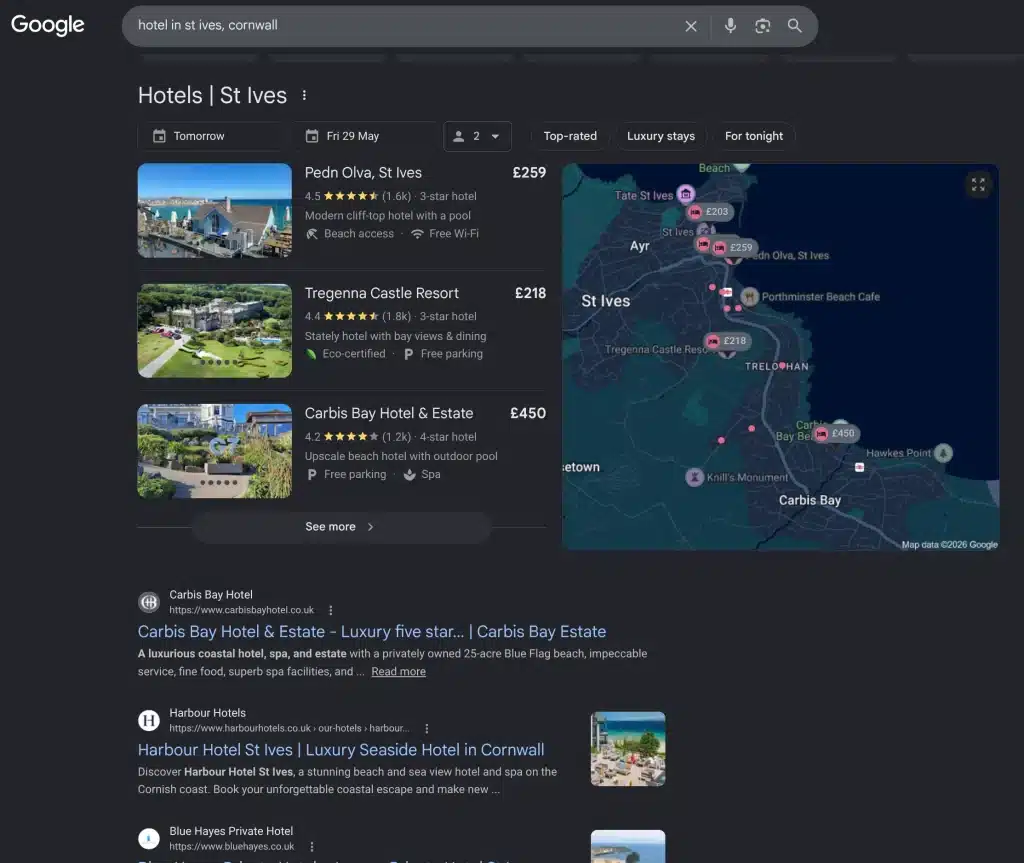
While paid ads can give you a quick boost, SEO is more like planting a tree. It takes time and effort to get going, but once it’s established, it keeps giving back. You’re building a sustainable way for customers to find you without you having to pay for every single click. This organic growth means more consistent leads and a stronger reputation over time. It’s about building trust and authority, so when people search for things like “local accountant” in Cornwall, your business pops up naturally.
Why Local SEO Is The Best Starting Point
For most businesses here in Cornwall, starting with local SEO is a no brainer. Why? Because when someone searches for “cafe near me” or “plumber St Austell”, they’re usually ready to buy or visit right then and there. Local SEO helps you get found by people in your immediate area. This means optimising your Google Business Profile, getting local citations, and encouraging customer reviews. It’s about making sure that when someone in Penzance needs a service you provide, they see you first. This is key for getting found online Cornwall-wide.
Building Authority Through Content Marketing
Once you’ve got your local SEO sorted, think about creating useful content. This could be blog posts, guides, or even simple FAQs that answer your customers’ questions. When you consistently put out helpful information, Google sees your business as an expert. This builds your authority and helps you rank for a wider range of searches. It’s a bit like becoming the go-to source for information in your field, which naturally draws more people to your website. For a deeper dive into how this works, check out this guide to SEO for Cornwall businesses.
For Cornish businesses, especially those in tourism or with a strong local customer base, focusing on local SEO and content marketing first often yields the best results. It targets customers who are actively looking for your services right now and builds a foundation that pays off for years to come.
Leveraging Pay-Per-Click Advertising In Cornwall
Driving Immediate Visibility With Google Ads
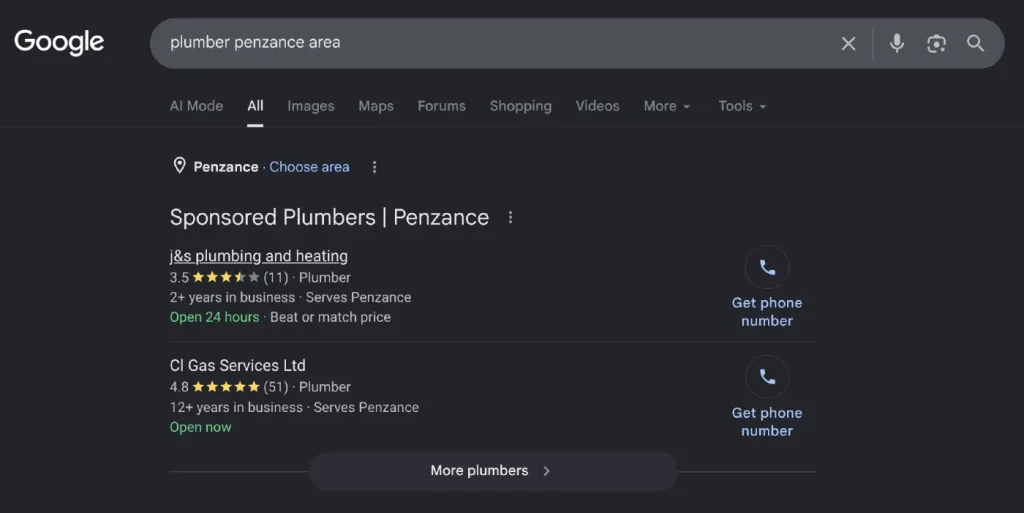
If you need to get your business in front of potential customers right now, Pay-Per-Click (PPC) advertising is your go-to. Think of it like this: when someone types a specific phrase into Google, like ‘plumber near me’ or ‘Cornish holiday cottage’, your advert can pop up at the very top of the search results. You only pay when someone actually clicks on your ad, which is why it’s called Pay-Per-Click. It’s a really effective way to get your business seen by people who are actively looking for what you offer, right when they’re looking for it. Platforms like Google Ads are brilliant for this, letting you target exactly who you want to reach.
Targeting The Right Customers At The Right Time
One of the best things about PPC campaigns is how precise you can be. You’re not just shouting into the void; you’re talking directly to people who are likely to be interested. You can choose to show your ads to people in specific locations – perfect for a Cornish business wanting local customers. You can also target them based on their interests, what they’ve searched for before, or even the time of day. This means your marketing budget is spent reaching the most relevant audience, rather than wasting money on people who aren’t a good fit. It’s all about making sure your advert lands in front of the right eyes.
PPC Strategy Designed For Cornwall Businesses
Creating a successful PPC strategy for a Cornish business means understanding the local market. For example, if you run a holiday let, you’ll want to ramp up your advertising during peak tourist seasons. Conversely, a local tradesperson might focus on keywords that locals use year-round. It’s about being smart with your budget and your timing. Here’s a quick look at how you might approach it:
- Keyword Research: Find out the exact words and phrases your potential customers are typing into search engines.
- Ad Copywriting: Write compelling adverts that grab attention and clearly state what you offer.
- Landing Page Optimisation: Make sure the page people land on after clicking your ad is relevant and encourages them to take action.
- Budget Management: Set a daily or monthly budget to control your spending and get the best return.
When planning your PPC campaigns, remember that the digital landscape is always changing. What works today might need tweaking tomorrow. Staying flexible and keeping an eye on your results is key to long-term success.
Combining PPC with other digital marketing efforts, like SEO, can create a powerful online presence for your business. While SEO builds long-term organic growth, PPC provides that immediate boost, ensuring you’re visible while your organic rankings climb. For businesses looking for tailored digital strategies, exploring options with local digital marketing experts can make a real difference.
SEO Versus PPC: A Strategic Comparison
You’ve probably heard a lot about SEO and PPC, and maybe you’re wondering how they stack up against each other, especially for a business here in Cornwall. It’s not really a case of one being ‘better’ than the other; they’re more like different tools in your digital marketing toolbox, each with its own strengths.
Immediate Impact Versus Sustainable Growth
Think of PPC (Pay-Per-Click) like hiring a taxi. You pay for a direct, immediate journey to where you want to go. As soon as you stop paying, the taxi stops coming. This is brilliant for getting in front of potential customers right now, perhaps for a seasonal sale or a new service launch. You can target specific searches, and your advert can appear at the top of Google results almost instantly. It’s fantastic for driving quick visibility and can be a real lifesaver when you need results fast.
SEO (Search Engine Optimisation), on the other hand, is more like planting a tree. It takes time, effort, and consistent care to grow, but once it’s established, it provides shade and fruit for years to come, without you having to pay for each piece of fruit. SEO focuses on improving your website’s natural ranking in search results over time. This means when people search for terms related to your business, your website appears organically, and you don’t pay for each click.
The long-term value of organic growth through SEO is immense, building trust and authority that paid ads alone can’t replicate.
Here’s a quick look at the main differences:
- PPC:
- Immediate results
- Pay per click
- Great for short-term campaigns
- Highly controllable targeting
- SEO:
- Long-term, sustainable growth
- Free organic traffic
- Builds authority and trust
- Takes time to see significant results
When To Prioritise Paid Ads Over Organic Search
So, when should you lean more towards paid advertising versus organic search? If you’ve got a specific event happening next week, like a summer festival promotion or a limited-time offer on Cornish pasties, PPC is your go-to. It allows you to get your message in front of people who are actively searching for what you offer at that very moment. It’s also a good way to test the waters with new keywords or services to see what gets a good response before investing heavily in SEO for them.
For businesses in Cornwall, especially those tied to tourism, understanding seasonal peaks is key. PPC can be incredibly effective during busy periods when you want to capture every potential customer searching online. It’s about being visible when demand is highest.
The Synergy Of Combining SEO And PPC
Honestly, the most powerful approach for most Cornish businesses is to use both SEO and PPC together. They don’t have to be in competition; they can actually work hand-in-hand. You can use PPC to get immediate visibility while your SEO efforts are building momentum. The data you gather from your PPC campaigns – like which keywords are driving conversions – can directly inform and improve your SEO strategy.
For instance, if you find that a particular search term is bringing in a lot of business through ads, you’ll know it’s a keyword worth optimising your website for organically. This combined approach helps you capture traffic across the entire search results page, maximising your chances of being found. It’s about having a presence both immediately and for the long haul, which is a pretty solid strategy for any business looking to grow in the competitive Cornish market. Optimising your Google Business Profile is also a key part of this, bridging the gap between local search and visibility.
Common Pitfalls For Cornish Digital Marketing Efforts

There are some little slip-ups that can really trip up your digital marketing here in Cornwall. It’s easy to get excited and jump in, but sometimes, we miss a few key things that make all the difference. We’ve seen it happen, and honestly, it’s a shame when good intentions go to waste.
Ignoring the Importance of Google Business Profile
This is a big one, especially for businesses that rely on local customers popping in or calling up. Your Google Business Profile (GBP) is basically your shop window on Google Search and Maps. For many Cornish businesses, it’s often the first point of contact a potential customer has with you. If it’s not set up properly, or worse, completely ignored, you’re missing out on a huge chunk of local interest. Think about it: people are searching for ‘cafes near me’ or ‘plumber in St Ives’ all the time. If your GBP isn’t optimised with up-to-date info, good photos, and recent reviews, you’re letting potential customers walk straight past your digital door.
- Make sure your business hours are always correct, especially during holidays.
- Encourage happy customers to leave reviews – they really do matter.
- Upload plenty of good quality photos of your business, products, or services.
The Danger of Spreading Marketing Efforts Too Thin
It’s tempting to try and be everywhere online, isn’t it? You see other businesses on Facebook, Instagram, TikTok, LinkedIn, and you think you need to be there too. But here’s the thing: doing a bit of everything often means you end up doing nothing particularly well. For a Cornish business, especially if you’re a smaller operation, it’s far more effective to pick a couple of channels that really suit your customers and focus your energy there. Trying to manage five different social media accounts, plus email, plus SEO, can spread your time and budget so thin that none of it actually works. It’s better to have a really strong presence on one or two platforms than a weak one everywhere. We’ve found that focusing on local SEO and a strong website often gives the best bang for your buck initially.
Quitting Digital Marketing Campaigns Too Early
This is probably the most common mistake we see. Digital marketing, especially things like SEO and content marketing, isn’t a ‘set it and forget it’ kind of deal. It takes time to build momentum. SEO, for example, can take anywhere from three to six months, sometimes longer, before you start seeing significant results in search rankings. If you invest time and money for a couple of months and then stop because you’re not seeing overnight success, you’re essentially throwing away all the hard work you’ve already done. It’s like planting a seed and digging it up every week to see if it’s growing. You need to give it time to establish roots and flourish. Consistency is key; those who stick with it are the ones who reap the long-term rewards.
Many businesses mistakenly believe that digital marketing should deliver instant results, much like a paid advert. However, organic strategies like SEO and content marketing are about building a sustainable online presence over time. Patience and consistent effort are not just virtues here; they are necessities for success.
It’s easy to get disheartened, but remember that avoiding these common pitfalls is a massive step towards making your digital marketing efforts actually pay off for your Cornish business.
Measuring Success In Your Digital Marketing Campaigns
You’ve put in the effort, you’ve got your SEO or PPC campaigns running, but how do you actually know if it’s working? It’s easy to get lost in all the numbers, but we need to focus on what really matters for your Cornish business.
Setting Specific, Measurable Goals
First off, forget vague ideas like “getting more customers.” That’s not really a goal, is it? We need to get specific. Think about what you actually want to achieve. Do you want more people filling out your contact form? More phone calls? More online bookings or sales? Setting clear, quantifiable targets is the bedrock of any successful marketing effort. For example, instead of “more leads,” aim for “10 qualified enquiries per month from organic search” or “£50,000 additional revenue from online channels this quarter.” This gives you something concrete to aim for and measure against.
Tracking Key Performance Indicators For ROI
Once you’ve got your goals, you need to track the right things to see if you’re hitting them. This is where Key Performance Indicators (KPIs) come in. You’ll want to keep an eye on things like:
- Conversion Rate: What percentage of people who visit your site actually do what you want them to do (like call you, fill out a form, or buy something)?
- Cost Per Acquisition (CPA): How much are you spending on marketing to get each new customer? We want this number to be as low as possible while still bringing in good business.
- Return on Investment (ROI): This is the big one. Are you making more money from your marketing efforts than you’re spending on them? It’s about seeing a positive return.
- Enquiries and Leads: Simply put, how many people are actually getting in touch with you because of your marketing?
These are the numbers that tell you if your campaigns are actually making you money, not just looking busy. You can get a good picture of your campaign performance by looking at these indicators.
It’s tempting to get excited about website traffic numbers, but remember, traffic alone doesn’t pay the bills. Focus on the actions that lead to business, like enquiries and sales. A thousand visitors who do nothing are less valuable than a hundred visitors who become paying customers.
Understanding Customer Search Behaviour
Knowing how people are finding you and what they’re looking for is just as important. Tools like Google Search Console are brilliant for this. They show you the exact search terms people typed into Google to land on your website. This is gold dust for understanding your audience. Are they searching for specific services you offer? Are they looking for local businesses like yours? By understanding this, you can tailor your content and your ad campaigns to match what your potential customers are actually searching for. It helps you focus your efforts on the channels that are bringing in the right kind of visitors for your Cornish business.
Tailoring Digital Strategies For The Cornish Market
Accounting For Seasonal Tourism Peaks
First off, you can’t ignore the elephant in the room: tourism. Cornwall’s economy gets a massive boost from visitors, particularly in the summer months. This means search volumes for things like ‘places to stay’ or ‘things to do’ go through the roof from May to September, then drop off a cliff. Your digital marketing needs to ride this wave.
- Ramp up your content and ad spend a few weeks before the tourist season kicks off. Get your name out there when people are actively planning their trips.
- Build an email list during the busy summer months. These are your potential customers who might visit again or book during quieter times.
- Focus on local searches during the off-season. Think about what residents need year-round, like ’emergency plumber’ or ‘local bakery’.
This seasonal swing affects most Cornish business growth strategies, so planning for it is key. You don’t want to be caught out when the crowds disappear.
Focusing Channels For Localised Success
Trying to be everywhere at once is a recipe for disaster. It’s far better to pick a couple of channels and do them really well. For many Cornish businesses, especially those serving locals, your Google Business Profile is gold. Make sure it’s complete, up-to-date, and has plenty of good reviews. It often drives more enquiries than your website itself!
For local businesses, your Google Business Profile listing often drives more enquiries than your website. According to BrightLocal’s 2026 survey, 41% of consumers “always” read reviews when browsing for businesses – up from 29% last year. Yet many Cornwall businesses leave their profile incomplete.
If you’re a restaurant in St Ives, you’ll want to be strong on Instagram and Google. If you’re a tradesperson covering rural areas, a professional website and solid local SEO are probably more important. It’s about understanding who you’re trying to reach and where they hang out online.
The Unique Advantages Of Cornwall’s Digital Landscape
Here’s the good news: because many local competitors are still a bit behind on their digital marketing, there’s a real opportunity for you to get ahead. You don’t need to spend a fortune to make an impact. Focusing your efforts smartly is what counts. For instance, SEO delivers a fantastic return on investment over time, making it a strong long-term play for Cornish businesses. Getting your website and local SEO sorted is a great starting point. Remember, consistency is key. Don’t expect miracles overnight, but stick with it, and you’ll see the rewards.
So, What’s the Verdict?
We’ve had a good look at SEO and PPC, and hopefully, it’s a bit clearer now. For your Cornish business, it’s not really about picking one over the other, is it? Think of it like this: PPC is like putting up a big, bright sign right outside your shop when you’ve got a sale on – it gets people in now. SEO, on the other hand, is like building a really solid reputation over time, so people know where to find you, even when there isn’t a sale. For those busy summer months, PPC can be a lifesaver, bringing in customers straight away. But when things quieten down, that SEO work you’ve put in, that’s what keeps the enquiries coming in year-round, building something for the long haul. Most Cornish businesses will probably find a mix works best. Start with a strong SEO foundation, especially your Google Business Profile, and then use PPC to give you that extra boost when you need it most. It’s all about working smarter for your specific business and what you want to achieve.
Frequently Asked Questions
Should I focus on SEO or PPC first for my Cornish business?
. For Cornish businesses, especially those with busy summer seasons, SEO builds a solid foundation that keeps bringing customers year-round, even when tourists aren’t here. It’s usually best to start with SEO because it’s a long-term investment that pays off. However, if you need customers “right now”, PPC can be a great quick boost.
How much should I spend on digital marketing in Cornwall?
For many small businesses in Cornwall, spending between £300 and £1,500 a month on specific marketing efforts can make a real difference. Getting your Google Business Profile sorted and doing basic local SEO costs nothing but your time, and many businesses find this is a great place to start. If you’re looking to invest more, think about where you’ll get the best bang for your buck.
Is SEO or social media better for my local business?
Generally, SEO offers a better long-term return for businesses that offer services. People searching on Google for ‘plumber near me’ or ‘best pub Falmouth’ are often ready to buy. Social media is fantastic for getting your name out there and chatting with people, especially if you’re in the food, drink, or retail business in a busy tourist spot. But for getting people who are actively looking for what you do, SEO usually wins in the long run.
How long does it take to see results from digital marketing?
It really depends on what you’re doing! Paid ads (PPC) can bring in customers almost immediately, but they stop working as soon as you stop paying. SEO, on the other hand, is more like a slow burn; it can take three to six months to really start seeing your website climb up the search results. If you’re doing things like email marketing or social media, you might see results in a few weeks if you already have people following you. The key is to be consistent; businesses that stick with it for at least six months usually see the best rewards.
Do I really need a website if I have a good social media page?
Yes, you absolutely need a website. Think of social media as a shop window or a place to chat with customers, but your website is your actual shop. It’s where people go to get all the important details, trust you, and make a purchase or booking. A professional-looking website builds credibility, and it’s something you fully control, unlike social media platforms. Many people still search directly on Google, and they’ll expect to find your website.
What are the biggest mistakes Cornish businesses make with online marketing?
A few common slip-ups include not paying enough attention to their Google Business Profile (which is super important for local searches!), trying to do too many things at once instead of focusing on a couple of channels well, and giving up too soon on things like SEO because they don’t see results overnight. Also, simply copying what big companies in London do often doesn’t work well for businesses here in Cornwall because our market is different.


