

Right then, let’s talk about getting your Cornish business noticed online in 2026. The way people search has really changed, especially with AI popping up everywhere and everyone looking for local stuff. If you’re a small business owner in Cornwall, you’ve probably noticed things aren’t quite the same as they used to be. This guide is all about making sure you’re not just online, but actually showing up when potential customers in Cornwall are looking for what you offer. We’ll cover how to get your website seen, especially by people right here in Cornwall, and make sure you’re not missing out on business.
Key Takeaways
- Cornwall’s economy has its own rhythm with tourism and a growing tech scene, so your SEO Cornwall strategy needs to keep up with these local shifts.
- Focus on local search terms that people actually use when they’re looking to buy or book something near them in Cornwall.
- With AI search growing, make sure your content answers questions directly and your Google Business Profile is spot on.
- Creating content that’s specific to Cornwall and its communities will help you stand out from the crowd.
- Keep checking how your site is doing and make small improvements regularly – it’s better than doing nothing and helps you rank better over time.
Understanding Cornwall’s Unique Search Landscape
Let’s get stuck into what makes searching for things in Cornwall a bit different. It’s not quite the same as trying to get noticed in London, is it? We’ve got our own rhythm down here, and understanding that is the first step to getting your business seen online.
Adapting SEO to Seasonal Economic Fluctuations
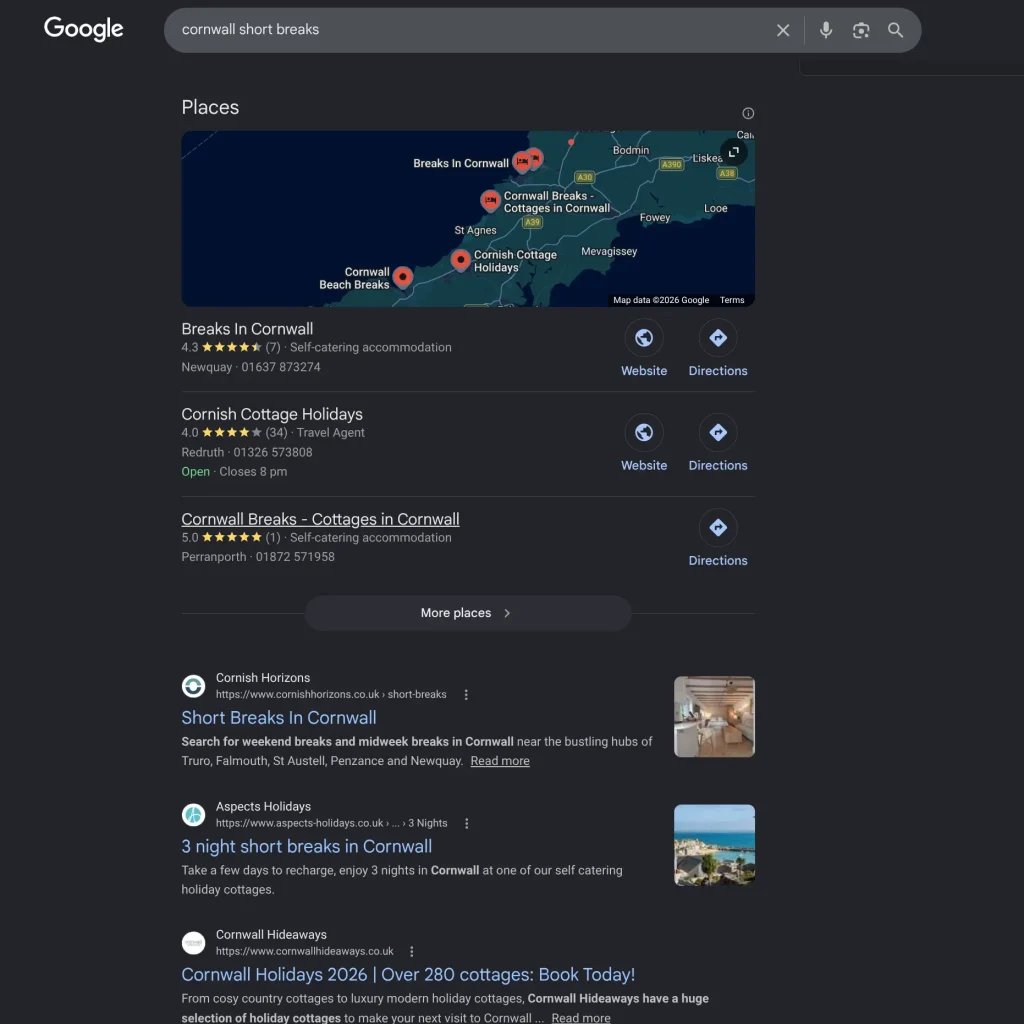
Cornwall’s economy, as you know, has a big seasonal swing. Think summer holidays versus the quieter winter months. This affects what people are searching for and when. During peak season, searches for ‘holiday lets Newquay’ or ‘restaurants Falmouth’ will skyrocket. Come winter, you might see more interest in ‘Cornwall short breaks’ or ‘cosy pubs Bodmin’. Your SEO strategy needs to flex with these changes. It’s about being visible when the demand is high and perhaps shifting focus to different keywords or content that appeals during the off season. For example, you could create content about ‘winter walks in Cornwall’ or ‘festive events’ to keep engagement up when tourism dips.
Leveraging the Cornish Tech Corridor for Visibility
While we’re famous for our beaches, Cornwall is also building a name for itself in tech. This ‘tech corridor’ means there’s a growing local demand for digital services and a community of businesses that understand the importance of online presence. If you’re a tech-focused business, or even if you’re not but want to tap into this growing sector, think about keywords related to innovation, digital solutions, and business support within Cornwall. Getting involved in local tech events or online forums can also boost your profile and lead to valuable connections and backlinks. This is a great area for Cornwall search engine optimisation tips.
Tailoring Search Strategies for the Tourism Sector
Let’s be honest, tourism is massive here. If your business serves visitors, your search engine optimisation needs to be spot on. This isn’t just about general tourism keywords; it’s about getting specific. Think about what people search for when planning a trip: ‘dog friendly cottages Cornwall’, ‘family days out St Ives’, ‘surfing lessons Polzeath’. You need to match these specific needs with your content and services. Optimising your Google Business Profile with accurate opening times, photos, and services is a must. For tourism businesses, effective tourism SEO can make a huge difference to bookings.
Cornwall’s search landscape is shaped by its unique character: a strong seasonal tourism industry, a growing tech scene, and a close-knit community. Your online strategy needs to reflect this reality, not a generic one size fits all approach.
Mastering Keyword Strategy for Cornwall Businesses
Now let’s move on to keywords. It sounds a bit technical, but honestly, it’s just about figuring out what words and phrases people in Cornwall are actually typing into Google when they’re looking for what you offer. Get this bit right, and you’re halfway to getting found online. It’s a bit like knowing the right dialect to speak to your customers.
Identifying High-Intent Local Search Terms
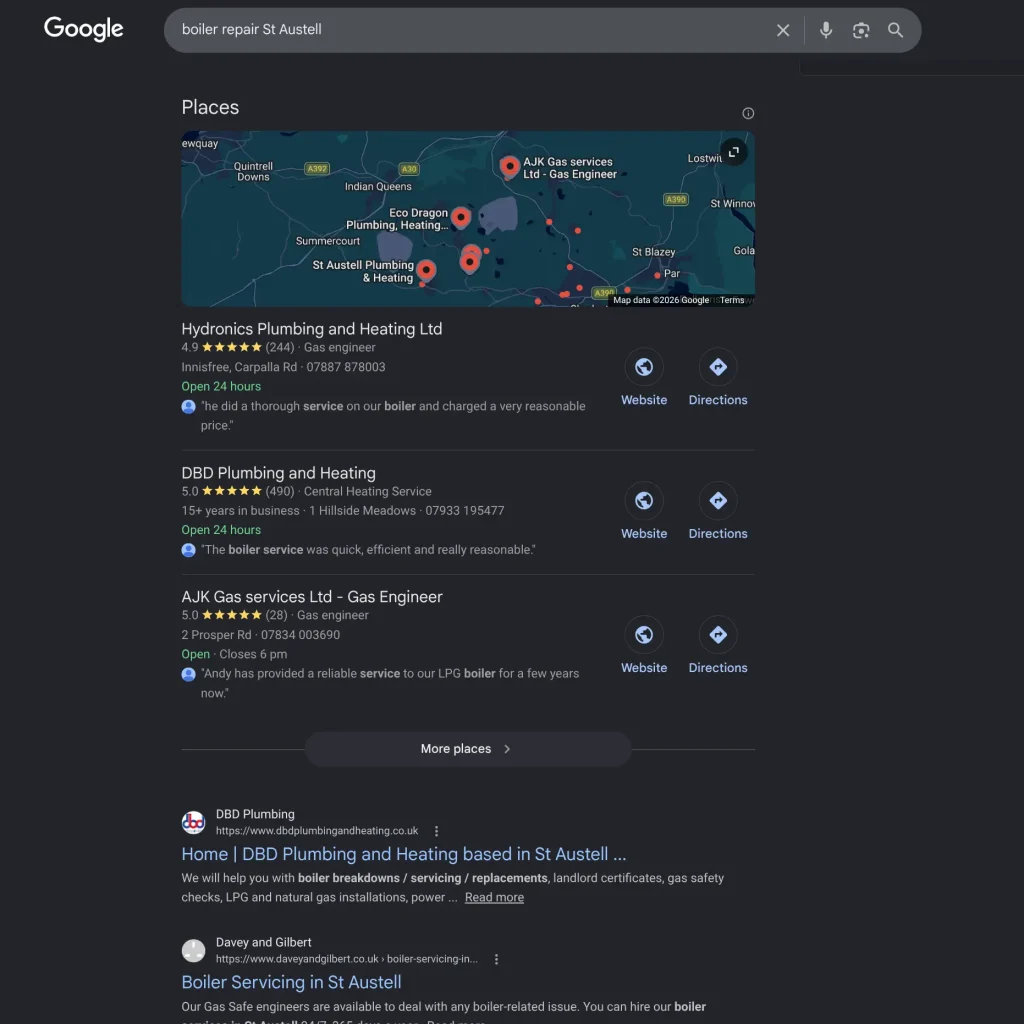
This is where we get specific. You’re not just looking for any old search term; you want the ones that show someone is ready to buy or book. Think about what someone would type if they were right here in Cornwall and needed your service now. For example, instead of just ‘plumber’, you’d want ’emergency plumber Penzance’ or ‘boiler repair St Austell’. These are the terms that tell you someone’s got a problem they need solving pretty sharpish.
- Think like your customer: What problem are they trying to solve?
- Add location, location, location: Always include Cornwall or specific towns and villages.
- Consider the service: What exactly are they looking for? ‘Web design’ or ‘Cornwall web design for cafes’?
The goal is to catch people who are actively looking for your specific services in your specific area. This is a key part of effective Google Maps optimisation.
Building Topical Authority with Keyword Clusters
Once you’ve got a good list of keywords, don’t just scatter them about randomly. We need to group them. This is called keyword clustering. The idea is that a single page on your website should cover a main topic and all its related subtopics. So, if you offer SEO services, you might have a main page about ‘SEO services Cornwall’. Then, related keywords like ‘local SEO Cornwall’, ‘SEO audit Cornwall’, or ‘Cornwall business marketing’ could all be covered on that main page or linked to from it, showing Google you really know your stuff on that subject.
Grouping keywords this way helps you build what we call ‘topical authority’. It tells search engines that your website is a go-to resource for a particular subject, not just a collection of random pages.
This approach stops you from creating loads of thin, weak pages that compete against each other. Instead, you build one strong, authoritative page for each main topic.
Mapping Keywords to Service and Content Pages
Now, we need to put those keyword clusters to work. This is where keyword mapping comes in. You decide which page on your website is going to be the ‘home’ for each cluster of keywords. Your main service pages will likely target your most important, high-intent keywords. Blog posts can then be used to target more informational keywords or support your main service pages by answering specific questions related to your services.
For instance:
- Service Page: ‘Cornwall Wedding Photographer’ might target keywords like ‘wedding photographer Cornwall’, ‘best wedding photographers near me’, ‘hire wedding photographer Cornwall’.
- Blog Post: ‘Tips for Choosing Your Cornwall Wedding Photographer’ could target keywords like ‘how to pick a wedding photographer’, ‘questions to ask wedding photographers’, ‘wedding photography advice Cornwall’.
This structured approach ensures that every piece of content you create has a purpose and is designed to attract the right kind of visitor. It’s a core part of Search Engine Optimization (SEO) for Cornwall businesses. Making sure your keywords are mapped correctly means you’re not wasting effort on content that won’t help you rank.
The 2026 Shift: Local Search and AI Integration
Let’s talk about what’s really changed in local search for 2026. It’s not just a tweak; it’s a whole new ball game, especially with AI getting smarter. You can’t just do the same old things and expect different results, can you? We’re now juggling a few different places where people are looking for businesses like yours.
Navigating the Local Pack, Organic Listings, and AI Overviews
Think of it like this: you’ve got three main areas to be visible in now. First, there’s the familiar Local Pack, that map bit that shows up. It’s more dynamic than ever, pulling in real-time info. Then you’ve got your standard organic listings, the blue links that give people more in-depth info. But the big one, the one that’s really shaking things up, is AI Overviews. These are the AI-generated answers that pop up at the top, often giving people the answer without them even needing to click through to a website. To really get noticed, you need to be the go-to answer in all three.
Here’s a quick breakdown of where you’re competing:
- Local Pack: Still important, but more integrated with live data.
- Organic Listings: Your traditional website results, for deeper dives.
- AI Overviews: AI synthesising answers directly, often a zero-click experience.
It means your content needs to be clear, concise, and directly answer questions. If you’re looking for ways to get ahead of these changes, exploring the evolving landscape of AI search in 2026 might give you some ideas [71ec].
Optimising for Conversational Voice Search Queries
Remember when voice search was a bit of a novelty? Well, it’s not anymore. For local searches, especially when people are out and about, voice is often the first port of call. These aren’t snappy, keyword based searches anymore; they’re full on questions, like “Where can I find a decent Indian restaurant open late near St Ives?” To nail this, your website content should be structured like a conversation. Think about the questions your customers ask and answer them directly. Using FAQs on your site, especially with clear headings and short answers, makes it much easier for AI to pull that information out and use it. It’s about being helpful and direct.
Transforming Customer Reviews into Ranking Power
Customer reviews have become incredibly important, and it’s not just about getting five stars. Google’s looking at a few things now. Firstly, how recent is the review? A glowing review from last week is worth far more than one from two years ago. Secondly, detail matters. If someone mentions a specific service, like “great job fixing my leaky tap,” that helps you rank for “tap repair.” Finally, photos and videos in reviews are gold. They build trust for other potential customers and show the algorithm you’re a real, active business. Treating every review as a chance to show off your service is key.
The old way of just getting a few reviews and hoping for the best is long gone. Now, it’s about actively encouraging detailed, recent feedback and using it to your advantage. It’s a direct signal of trust and relevance that search engines are paying close attention to.
Essential SEO Tactics for Cornish SMEs

Let’s get down to the nitty-gritty of making your small business shine online. We’re talking about practical steps you can take to get more eyes on your Cornish venture. It’s not about magic, it’s about smart work.
The Power of Hyperlocal Content Creation
Think about what makes Cornwall special. It’s not just a place; it’s a feeling, a community. Your content needs to reflect that. Instead of just writing about ‘plumbing services’, try ’emergency plumbing in Falmouth’ or ‘drain unblocking for coastal properties near St Ives’. This kind of specific content speaks directly to people in your area who are actively looking for what you do. It shows you understand their needs and your local patch.
- Focus on local events and news: Tie your services into what’s happening locally. If there’s a big festival coming up, how can your business support it or benefit from the increased footfall?
- Highlight local landmarks and areas: Mentioning specific places people recognise builds trust and relevance.
- Use local dialect or references (carefully!): A subtle nod to local culture can make your content feel more authentic.
- Create guides for local customers: For example, a bakery could write ‘The Best Snacks for a Day Trip to Padstow’.
This approach is key for any digital marketing Cornwall small business needs to consider.
Leveraging Google Business Profile for Local Dominance
Your Google Business Profile (GBP) is probably the most important free tool you have for local SEO. It’s what shows up when people search for businesses like yours on Google Maps and in the local search results. Getting this right can make a massive difference to your visibility.
- Complete every section: Don’t leave anything blank. Fill out your services, opening hours, photos, and any special attributes.
- Encourage and respond to reviews: Positive reviews are gold. Make it easy for happy customers to leave feedback and always reply, even to negative ones, professionally.
- Post updates regularly: Use the posts feature to share offers, news, or new products. It keeps your profile fresh and shows Google you’re active.
- Use local SEO services in Cornwall to help you manage and optimise this if you’re short on time.
Think of your Google Business Profile as your digital shop window. If it’s messy, outdated, or empty, people will walk right past.
Avoiding Common Ranking Pitfalls
It’s easy to make mistakes that can hold your website back. Here are a few common traps Cornish SMEs fall into:
- Ignoring mobile users: Most searches happen on phones these days. If your website isn’t mobile-friendly, you’re losing out big time.
- Thin or duplicate content: Just copying and pasting information or having very little text on a page won’t help you rank. Google wants to see helpful, unique content.
- Poor website speed: If your site takes ages to load, people will leave before they even see what you offer. This is a big signal to Google that your site isn’t great.
- Not having clear calls to action: What do you want people to do once they land on your page? Make it obvious – ‘Call us today’, ‘Get a quote’, ‘Book now’.
Focusing on these practical tactics will help you grow your business online in Cornwall. It’s about being visible where your local customers are looking. If you’re looking for support with your small business SEO, consider getting help from a local expert who understands the Cornish market. A Cornwall-based SEO agency can offer tailored strategies to boost your online presence.
Building Your Cornwall SEO Toolkit
So what do you need to get your Cornish business noticed online? Think of this as your digital toolbox. Having the right tools makes all the difference, whether you’re a surf school in Newquay or a bakery in Penzance.

Essential Tools for Keyword Research and Audits
Before you start writing anything or tweaking your website, you need to know what people are actually searching for. This is where keyword research comes in. You’re looking for terms that potential customers in Cornwall are typing into Google. For example, someone looking for a web designer might search for “Cornwall web design SEO” or “web designer Truro”. Tools can help you find these. Google Keyword Planner is a free starting point, but for more in-depth analysis, you might look at options like SEMrush or Ahrefs. These can show you search volumes and how tricky it might be to rank for certain terms.
When it comes to auditing your site, you want to know what’s working and what’s not. Tools like Screaming Frog can crawl your website and identify technical issues that might be holding you back. Google Search Console is also a must-have; it tells you how Google sees your site and flags any errors.
Utilising AI for Content Optimisation
AI is changing the game, and it’s not just for the big players. For small businesses in Cornwall, AI tools can be a massive help in making your content work harder. Think about using AI to help you brainstorm blog post ideas based on your keywords, or even to help rephrase sentences to make them clearer. It can also assist in checking your content for readability and suggesting improvements. Don’t let AI write everything for you, though; your unique local voice is still super important. It’s best used as a writing assistant, helping you polish your work and make it more effective.
Measuring Key Performance Indicators That Matter
So, you’ve got your tools, you’re creating content, but how do you know if it’s actually working? This is where tracking your Key Performance Indicators (KPIs) comes in. You don’t want to get bogged down in numbers that don’t mean anything for your business. For a local Cornish business, some key things to watch are:
- Website Traffic: How many people are visiting your site?
- Keyword Rankings: Are you showing up higher in search results for your important terms?
- Conversions: Are visitors taking the actions you want them to, like filling out a contact form or making a booking?
- Local Pack Visibility: Are you appearing in the map results for local searches?
Understanding these metrics helps you see what’s effective and where you need to adjust your strategy. It’s all about making sure your SEO efforts are actually bringing in customers.
You need to know what success looks like for your business. Is it more phone calls, more online bookings, or more people visiting your shop? Your SEO efforts should directly support these goals. Without clear targets, you’re just guessing.
Keeping an eye on your SEO costs is also part of this. You want to make sure you’re getting a good return on your investment, whether you’re doing the work yourself or hiring someone. Understanding SEO costs can help you budget effectively.
The Continuous Optimisation Loop

So you’ve put in the graft, got your website looking sharp and your content singing. But here’s the thing about SEO, especially in a place like Cornwall: it’s not a ‘set it and forget it’ kind of deal. Think of it more like tending a garden. You plant the seeds, water them, and then you’ve got to keep an eye on things, weed out the rubbish, and give it a bit of extra feed now and then. That’s where this continuous optimisation loop comes in. It’s all about making sure your hard work keeps paying off and your Cornish business stays visible.
Tracking Performance with Google Search Console
First off, you need to know what’s actually happening. Google Search Console is your best mate here. It’s free, and it tells you what search terms people are using to find you, how often you’re showing up, and how many people are actually clicking through. It’s like having a direct line to Google’s brain, showing you what’s working and what’s not. You can see which pages are getting clicks and which ones are just… there. Pay attention to your impressions and clicks; they’re the bread and butter of understanding your performance.
Identifying and Capitalising on Quick Wins
Once you’re looking at your Search Console data, you’ll start spotting opportunities. We’re talking about those keywords where you’re already ranking on page two or three, maybe positions 5 to 20. These are your ‘quick wins’. Why? Because they’re already close to the top. A few tweaks to those pages – maybe adding a bit more detail, improving a heading, or adding a relevant FAQ – can often push them right up to page one. It’s much easier than starting from scratch. Think about adding more specific subtopics that people are asking about, or strengthening the links from other pages on your site to these ones. This is where you can see results relatively fast, which is always a nice boost.
Iterative Improvement for Sustainable Rankings
So, you’ve made some changes based on your quick wins. What next? You don’t stop! This is the iterative part. You go back to Search Console, see if those changes made a difference, and then look for the next set of quick wins. It’s a cycle: track, identify, improve, track again. You might also want to look at your content structure. Are you using a pillar and cluster model? This means having a main, in-depth page on a core topic, with smaller blog posts that dive into specific questions and link back to that main page. This builds what we call topical authority, showing Google you’re a real expert on the subject. Keep refining your pages, adding new relevant information, and updating them when necessary. This ongoing effort keeps your rankings from slipping and helps you compete with businesses across the Cornwall landscape.
Remember, SEO isn’t a one-off project. It’s an ongoing process of refinement and adaptation. By consistently monitoring your performance and making targeted improvements, you build a stronger, more resilient online presence for your Cornish business. This approach helps you stay ahead of the curve, especially with the ever-changing search engine algorithms and the rise of AI.
This continuous loop is how you build lasting visibility. It’s about being smart with your time and focusing on the actions that yield the best results for your specific business needs. Don’t be afraid to experiment a little, but always base your decisions on the data you’re gathering. It’s a marathon, not a sprint, but with this approach, you’ll be well on your way to dominating local search results.
So, What’s Next for Your Cornish Business?
We’ve gone through a fair bit, haven’t we? From figuring out what people are actually searching for to making sure your website actually shows up when they do. It’s not exactly rocket science, but it does take a bit of effort. Remember, this isn’t a one-and-done thing; it’s more like tending to a garden. Keep at it, keep checking what’s working, and don’t be afraid to tweak things. Cornwall’s a special place, and your business deserves to be seen by the folks right here. So, get stuck in, make those changes, and let’s get your business noticed.
Frequently Asked Questions
Why is SEO different for businesses in Cornwall?
Cornwall’s economy has its own rhythm, especially with tourism and seasonal changes. Plus, there’s a growing tech scene! Your search strategy needs to keep up with these local vibes, focusing on what people in Cornwall are actually searching for, not just general terms.
How do I find the right search terms for my Cornish business?
Think about what your customers would type into Google. Use tools to see what people are searching for locally, like ‘best pasties near me’ or ‘plumber St Ives’. Group these terms into topics so you can create helpful content that answers their questions.
What’s changed with search in 2026?
Search is getting smarter! Google now uses AI to give quick answers, and voice searches (like asking Siri) are super common. You need to make sure your website is easy for AI to understand and answer questions directly, not just list information.
How can I make my business stand out locally?
Create content that’s all about Cornwall! Talk about local events, use local slang, and show how you help people in specific towns. Also, make sure your Google Business Profile is top-notch with up-to-date info and photos.
What are the most important tools for Cornwall SEO?
You don’t need loads of fancy stuff. Focus on tools that help you find local keywords, check how your website is performing (like Google Search Console), and maybe use AI to help write better content. Simple but effective is key.
How do I know if my SEO efforts are working?
Don’t just look at website visitors. Check if you’re showing up for local searches, if people are contacting you from your Google profile, and if you’re getting customers from the right areas. Keep an eye on these numbers and tweak your strategy as needed.


